Driving offers freedom and convenience, but it also comes with the responsibility of maintaining a complex machine. Whether you are navigating your daily highway commute or taking a cross-country road trip, unexpected mechanical failures, road hazards, and collisions can happen at any moment. Being prepared for these situations requires more than just keeping a spare tire in your trunk; it requires a clear understanding of your vehicle’s major systems and knowing which professional services to rely on when things go wrong.
By taking a proactive approach to automotive care, you can prevent minor issues from escalating into major safety hazards or costly breakdowns. This comprehensive guide walks through the essential emergency procedures, mechanical care, specialized repairs, and body restoration services every driver needs to keep their vehicle running smoothly and safely.
Navigating Highway Emergencies & Vehicle Recovery
Encountering a sudden breakdown on a bustling highway ranks high among the most stressful situations a driver may encounter. Whether this unfortunate event is triggered by an overheated engine, a blown tire, or a total electrical failure, the manner in which you manage the initial moments can significantly impact both your personal safety and the protection of your vehicle. It’s crucial to stay calm and act intelligently when facing such a circumstance on the road.
Step-by-Step Safety Protocols for Roadside Failures
The moment you sense that your vehicle is losing power or undergoing a critical mechanical fault, your immediate action should be to remove yourself from the main flow of traffic to ensure not only your safety but also that of your fellow drivers.
- Signal Early: It is imperative to activate your hazard lights at the very first sign of trouble. This alerts other drivers to your distress and the potential need for sudden adjustments in their driving to safely bypass your vehicle.
- Pull Over Safely: Carefully maneuver your vehicle towards the right shoulder or, if possible, an exit ramp where you can safely pull over. Avoid stopping in precarious locations such as narrow shoulders or areas near sharp curves where other drivers have limited visibility.
- Stay Inside the Cabin: If the breakdown occurs on a busy highway, the best practice is to remain inside your vehicle with your seatbelt fastened. Exiting the vehicle on such a roadway poses a severe threat, as passing traffic may not be able to react in time to avoid potential accidents.
- Set Up Warnings: In scenarios where it is safe to do so, such as in low-traffic zones, it is prudent to place warning triangles or flares approximately 50 to 100 feet behind your vehicle. This precautionary measure serves as a visual cue to alert approaching motorists of your stationary vehicle.
What to Expect During Vehicle Recovery and Transport
Once you have secured a safe location away from the primary traffic lanes, the next course of action is to contact a reputable tow truck service. Providing the dispatcher with a comprehensive and accurate description of your situation facilitates their ability to send the appropriate equipment specifically suited for your vehicle type. For example, all-wheel-drive vehicles often require a flatbed for safe transport to prevent damage to the transmission system, whereas standard front-wheel-drive vehicles may be efficiently towed using conventional wheel-lift methods.
While awaiting the arrival of assistance, take the time to gather your personal belongings, as well as crucial documents like vehicle registration and insurance information. Upon the tow truck’s arrival, ensure that you clearly communicate any specific issues experienced by your vehicle, such as problems with locked brakes or steering that could influence the loading and securing processes. By conveying these details, you enable the operator to safely and effectively prepare your car for transportation to a repair facility, ensuring its well-being and facilitating a smoother recovery process.
Core Mechanical Care & Daily Reliability
While emergency recovery services are critically important to address unexpected failures that can leave you stranded, routine mechanical maintenance is the cornerstone of ensuring consistent vehicle reliability over time. Modern automobiles are complex machines designed with durability in mind, capable of lasting for hundreds of thousands of miles. However, they require consistent attention and high-quality care to reach these impressive milestones.
Establishing a Proactive Maintenance Schedule
Ignoring small warning signs can often lead to severe mechanical damage later, transforming what might have been a minor fix into a costly repair issue. Establishing a well-structured routine maintenance schedule is crucial, as it keeps key systems running smoothly and helps catch wear and tear early before these components become compromised.
- Fluid Inspections: Regularly check vital fluids such as engine oil, coolant, brake fluid, and transmission fluid. These fluids should be at appropriate levels and free from contamination, which is vital as low or dirty fluids can lead to component overheating and subsequent premature failure of essential parts.
- Brake System Diagnostics: Pay attention to any strange noises such as squeals or grinding sounds when applying the brakes. These noises can indicate problems such as worn brake pads or air within the brake lines, which can result in a soft or spongy pedal feel, necessitating immediate replacement or service to ensure safety.
- Tire Maintenance: Conduct monthly inspections of tire tread depth and maintain optimal air pressure levels. Tread wear that is uneven can signal problems with wheel alignment or even the suspension system, which, if left unchecked, may lead to handling issues and affect the overall safety of the vehicle.
- Warning Lights: Never overlook illuminated warning signals such as the check engine light or oil pressure warning on your dashboard. These lights serve as an early alert system facilitated by modern onboard computers that detect minor anomalies in the vehicle’s operation long before they become noticeable driveability issues.
Partnering with Certified Automotive Professionals
While there are many basic checks and routine maintenance tasks that can be safely performed at home, complex diagnostics and intricate mechanical repairs require specialized tooling and the technical expertise of certified professionals. Entrusting your vehicle to certified mechanics ensures that all maintenance is conducted according to the precise specifications outlined by the vehicle manufacturer, safeguarding against improper servicing techniques.
Building a relationship with a trusted repair shop provides the added advantage of creating a comprehensive continuous service history for your car. This history not only aids in preserving the vehicle’s resale value but also plays an essential role in ensuring its long-term safety. When your vehicle requires comprehensive auto repairs, clear and open communication with your service advisor is essential.
Critical Specialized Systems & Heavy-Duty Maintenance
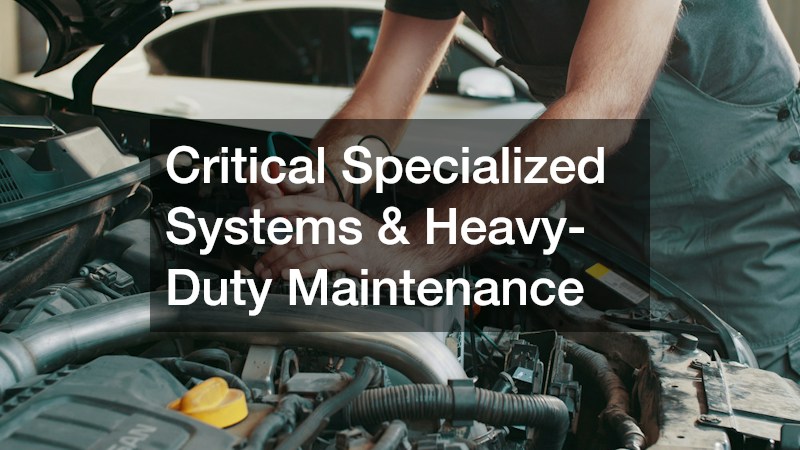
In today’s advanced automotive landscape, the responsibilities of vehicle maintenance extend far beyond the routine tasks such as oil changes and brake replacements. Modern automobiles are equipped with complex electronic systems and, increasingly, heavy-duty powertrains that require a highly specialized level of diagnostic expertise. These sophisticated components are integral to the safe and efficient operation of your vehicle, making it essential to have a deep understanding of how they work. By familiarizing yourself with these systems, you become better equipped to identify potential issues early on, reducing the chances of unexpected breakdowns that can leave you stranded on the road.
Troubleshooting Complex Electrical and Diagnostic Faults
Today’s vehicles are marvels of engineering, relying heavily on sophisticated networks made up of computers, sensors, and intricate wiring harnesses. These systems work in tandem to control virtually every function of the vehicle, from the timing of the engine’s spark to the regulation of the interior climate. When electrical problems crop up, they can manifest in many ways, from minor inconveniences to major malfunctions. For example, if there are issues within an electrical circuit, the symptoms could be as slight as a momentary glitch or as severe as a complete inability for the car to start. You may need car wiring repair.
Some of the tell-tale signs that your vehicle might be experiencing electrical difficulties include erratic behavior of dashboard gauges that may show incorrect readings, headlights that flicker unpredictably, or an unusually rapid depletion of the battery charge. It’s important to exercise caution when dealing with these issues, as attempting self-repairs without proper knowledge or tools can lead to further complications, including damage to sensitive electronic components of the vehicle’s onboard systems.
Specialized Care for High-Performance and Commercial Vehicles
Vehicles equipped with compression-ignition engines operate under significantly higher internal pressures and thermal stresses than standard gasoline engines. Proper care for these powertrains involves monitoring fuel injection systems, glow plugs, and emissions equipment like diesel particulate filters.
- Filter Replacements: High-pressure fuel injection systems require clean fuel; replacing fuel filters at recommended intervals prevents pump and injector wear.
- Thermal Management: Efficient cooling systems are vital for preventing cylinder head warping under heavy loads.
- Specialized Service Facilities: High-output engines demand dedicated technicians who understand their unique fuel and air systems. Utilizing a certified diesel engine repair service ensures correct oil viscosities and OEM-grade parts are used.
- Commercial and Fleet Maintenance: For work trucks and heavy-duty vehicles, routine inspections at a qualified local truck repair facility keep equipment compliant with safety standards and minimize operational downtime.
Post-Collision Restoration & Structural Care
Even the most cautious drivers can be involved in an accident. Beyond mechanical repairs, restoring a vehicle after a collision requires structural realignment, panel reconstruction, and surface refinishing to ensure it meets original safety and aesthetic standards.
Restoring Structural Integrity and Panel Alignment
When a collision occurs, damage is rarely limited to the exterior surface. Impact forces propagate through the frame and unibody structure, potentially altering collision safety zones and wheel alignment.
A professional auto body repair facility utilizes computerized measuring systems to pull and straighten chassis components back to factory specifications. Technicians repair or replace damaged panels, ensure precise door and hood gaps, and verify that safety features like crumple zones and airbag sensors function correctly before the vehicle returns to the road.
Advanced Refinishing, Color Matching, and Protection
Once structural alignment and metalwork are complete, the vehicle undergoes a multi-stage refinishing process to restore its original appearance and protect against corrosion.
- Surface Preparation: Damaged areas are sanded, filled, and primed to create a smooth, durable base for paint adhesion.
- Computerized Color Matching: Paint codes and spectrophotometers are used to match the exact shade and metallic flake of the existing factory finish.
- Environmental Sealing: Clean-room spray booths prevent dust and debris from contaminating the clear coat during application.
- Final Finishing: Professional auto painting services include curing the finish under specialized heat lamps, followed by buffing and polishing to achieve seamless paint blending.
Visibility, Glass Safety, and Structural Windshield Integrity
Your vehicle’s glass does far more than keep wind and rain out of the cabin; it is an integral structural component of modern automotive safety design. A clear, undamaged windshield is vital for driver visibility and passenger protection.
The Structural Role of Modern Vehicle Glass
Windshields are designed to provide up to 30 percent of a vehicle’s structural roof strength in the event of a rollover crash. Additionally, the windshield acts as a backstop for passenger-side airbags during deployment, ensuring they inflate toward the occupant rather than out through the front glass.
Small chips and cracks caused by road debris weaken this structural integrity over time. Changes in temperature or driving over rough roads can cause a minor chip to expand rapidly across the glass, compromising driver visibility and vehicle safety.
Repair vs. Replacement Standards and ADAS Recalibration
Not all glass damage requires total replacement. Minor surface chips smaller than a quarter can often be repaired using optical resin injections. However, if a crack extends to the edge of the glass, penetrates multiple layers, or sits directly in the driver’s line of sight, full replacement is necessary.
Following a complete car glass replacement, modern vehicles equipped with Advanced Driver Assistance Systems (ADAS) require an additional step. Cameras and radar sensors mounted behind the windshield must be precision-calibrated to ensure features like lane-keeping assist, forward collision warning, and automatic emergency braking function correctly.
Using This Guide for Auto Services
Maintaining a safe, reliable vehicle requires a combination of proactive maintenance, awareness of specialized mechanical systems, and knowing how to respond during roadside emergencies. From routine mechanical checkups and specialized electrical troubleshooting to structural collision repair and glass restoration, every service plays a distinct role in protecting your investment and ensuring your safety on the road.
By establishing relationships with certified repair professionals and keeping emergency contact numbers handy, you can navigate unexpected breakdowns and vehicle repairs with confidence. Taking the time to care for your vehicle today ensures that it remains safe, dependable, and ready for whatever lies ahead on the road.