Experiencing a severe roadside vehicle emergency is one of the most jarring events a driver can face. Whether your engine suffers a sudden, catastrophic mechanical failure while cruising at highway speeds or you are involved in a high-impact collision on a busy interstate, the moments immediately following the incident are critical. High speeds, disorienting noise, and the sudden loss of vehicle control push your nervous system into fight-or-flight mode. Yet, it is precisely in these high-stress moments that clear-headed decision-making is necessary.
The actions you take in the first hour following a vehicle emergency dictate not only your physical safety but also the financial, mechanical, and legal outcomes of the situation. Drivers often make panicked mistakes, such as stepping out into live lanes of traffic, agreeing to unauthorized vehicle transport, or making off-hand statements that inadvertently compromise their legal standing. Mitigating the consequences of a major vehicular crisis requires a structured, multi-phase plan.
This comprehensive guide serves as an actionable roadmap for managing every stage of a severe roadside emergency. By understanding how to secure the scene, document evidence, navigate complex repairs, and protect your legal rights, you can transform a chaotic crisis into a manageable recovery process.
Phase 1: On-Scene Safety and Hazard Mitigation
Master the First 60 Seconds
The moments immediately following a mechanical failure or impact are the most hazardous. Your single priority must be moving yourself and your passengers out of the direct flow of traffic. If your vehicle retains any momentum and control, execute the “Steer It, Clear It” protocol. Never stop in an active travel lane if your vehicle can coast to a safer location.
- Target the Right Shoulder: Always aim for the right shoulder or an emergency turnout. The left shoulder, adjacent to fast-moving HOV or express lanes, leaves you pinned against concrete barriers with minimal room for error.
- Angle Your Wheels: Once safely stopped on the shoulder, turn your steering wheel sharply away from the roadway (toward the guardrail or embankment). If another vehicle strikes your stopped car from behind, this prevents your vehicle from being pushed back into live traffic.
- Engage the Emergency Brake: Always set your parking brake firmly to stabilize the vehicle, especially if you are stopped on an incline or near a drop-off.
Signal Distress Without Compromising Personal Security
Once the vehicle is stationary, you must immediately make your presence visible to oncoming drivers. At highway speeds, drivers require hundreds of feet to react to a stationary hazard.
- Activate Hazard Lights Immediately: Turn on your hazard flashers as soon as you realize a breakdown is imminent. Leave them running for the duration of the event.
- Deploy Warning Devices Correctly: If you can safely exit the vehicle away from traffic, place reflective triangles or emergency flares behind your car. Place the first marker 10 feet behind the bumper, the second 100 feet back, and the third 200 feet back to give speeding traffic adequate warning.
- Evaluate Exit vs. Stay: If your car is resting in a live lane or on a narrow shoulder, exiting to stand behind a guardrail or up an embankment is often safer than remaining inside. However, if traffic is heavy and exiting requires walking near live lanes, remain inside with your seatbelt securely fastened.
Phase 2: Coordinating Emergency Transport and Scene Documentation
Capture Critical Evidence Before the Scene Changes
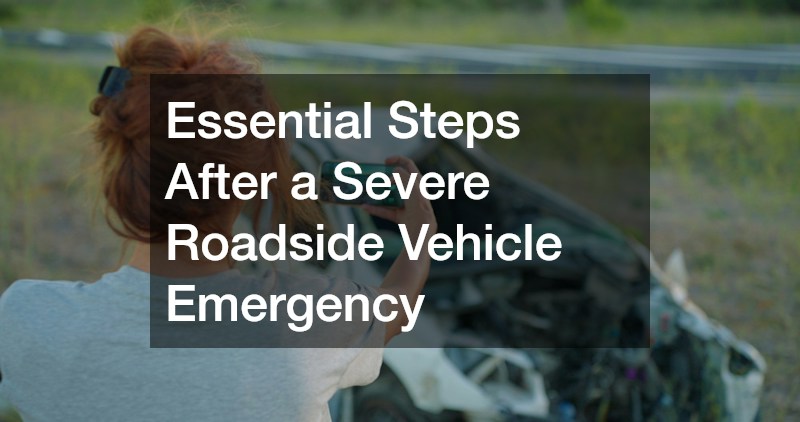
Before any vehicles are moved or roadside crews clear away debris, you must preserve an accurate visual record of the event. Physical evidence deteriorates rapidly as traffic passes and weather conditions change.
- Photograph the Broad Context: Capture wide-angle shots showing lane markings, traffic signals, weather conditions, road surface hazards (such as potholes or ice), and temporary construction zones.
- Document Physical Vehicle Damage: Take close-up and medium-range photographs of all damage to your vehicle, other involved vehicles, and surrounding property like guardrails or signs.
- Gather Official Information: Secure the police report reference number, badge numbers of responding officers, and contact details from neutral third-party witnesses before they depart the scene.
- Watch Your Language: Avoid making casual statements like “I didn’t see them” or “I’m so sorry.” These offhand remarks can be interpreted as admissions of fault in official reports.
Dispatching Transport and Navigating Vehicle Extraction
Calling for recovery services requires clear communication regarding your precise location and the mechanical condition of your vehicle. Informing the dispatcher whether your vehicle rolls freely or has locked wheels dictates the type of recovery vehicle sent.
A proper flatbed setup prevents severe transmission damage, especially on all-wheel-drive or four-wheel-drive platforms where towing with wheels on the ground can ruin transfer cases. Providing precise highway mile markers, direction of travel, and nearest exit names ensures rescue crews arrive quickly without wandering down opposing corridors.
Furthermore, having an experienced accident attorney on your side early in the post-collision phase helps protect your rights when negotiating with insurance companies. They can guide you on securing black box data from your vehicle and ensuring tow company charges align with local regulations rather than predatory fee structures. Always request the tow operator’s rate sheet and destination address in writing before allowing them to hook up your car.
Phase 3: Immediate Vehicle Triage and Glass Safety
Evaluating Structural and Environmental Visibility Damage
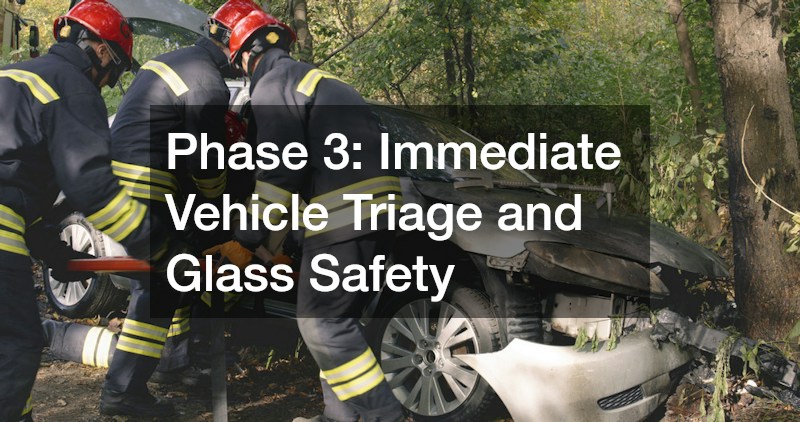
Once your vehicle arrives at a secure holding yard or repair facility, a systematic inspection of structural components must take place. Among the most vulnerable components during high-impact highway events or rollover threats is the vehicle’s structural glass envelope.
- Structural Integrity of Laminated Glass: Modern windshields are integral structural elements of your vehicle’s safety cage. A cracked windshield loses up to 40% of its structural roof-crush resistance during a rollover.
- Tempered Glass Shattering: Side and rear windows are made of tempered glass designed to disintegrate into small pebbles upon impact. If these blow out, rain, snow, and road grime can ruin your interior electronics and upholstery within hours.
- Immediate Weatherproofing: Apply specialized collision repair tape or heavy-duty plastic sheeting over open window frames immediately to protect sensitive cabin electronics from water intrusion while awaiting formal estimates.
Selecting Qualified Facilities for Initial Inspections
Choosing where your vehicle is stored and repaired should never be an impulse decision made under stress on the side of the road. Insist that the transport driver take your vehicle to a reputable, certified facility rather than an unknown storage lot that charges excessive daily holding fees.
A thorough auto repair strategy starts with a complete multi-point inspection that scans all mechanical, electrical, and structural systems. If windshield damage disrupts the camera arrays housed behind the rearview mirror, scheduling an auto glass replacement with dynamic ADAS recalibration is required. Without recalibrating these sensors, systems like lane-keep assist and automated emergency braking will fail or trigger erratically, putting you in danger once the car returns to the road.
Phase 4: In-Depth Diagnostic Work and Drivetrain Assessments
Assessing Undercarriage and Mechanical Systems
High-impact incidents or severe bottoming-out events cause hidden damage beneath the car that may not be obvious during a visual check. Sudden loss of hydraulic pressure or fluid starvation can ruin mechanical assemblies within miles of driving post-emergency.
- Fluid Leak Audits: Check for pooling fluids beneath the engine bay and differential. Distinct colors indicate specific system failures: red for transmission, clear/amber for hydraulic brake fluid, green/orange for coolant, and dark brown for engine oil.
- Brake Line Integrity: Hard impacts can pinch, sever, or stretch flexible brake lines, leading to sudden pedal loss.
- Suspension Bending: Inspect control arms, tie rods, and strut assemblies for micro-fractures, subtle bends, or torn rubber bushings that compromise steering response.
A professional brake repair service is necessary whenever a collision forces a vehicle off the paved surface or onto curbs. Impact forces easily warp brake rotors, crack cast-iron calipers, or damage ABS wheel speed sensors, leading to anti-lock system failure when you need it most.
Isolating Heavy Engine and Commercial Powerplant Issues
When a roadside emergency involves heavy-duty trucks, towing setups, or diesel passenger cars, mechanical evaluation requires specialized equipment. Thermal shocks, rapid coolant loss, or oil starvation during an accident cause catastrophic internal engine damage.
Running comprehensive diesel diagnostics allows technicians to access internal control module data, evaluate cylinder compression, check fuel injector delivery pressures, and assess turbocharger health. These electronic scans uncover hidden ECU error codes, such as over-boost conditions, severe thermal cycling, or sensor disruptions caused by the impact. Catching these mechanical issues early prevents complete engine seizure later on down the line.
Phase 5: Major Overhauls, DIY Options, and Reconstruction
Deciding Between Vehicle Totaling, Rebuilding, or Engine Swaps
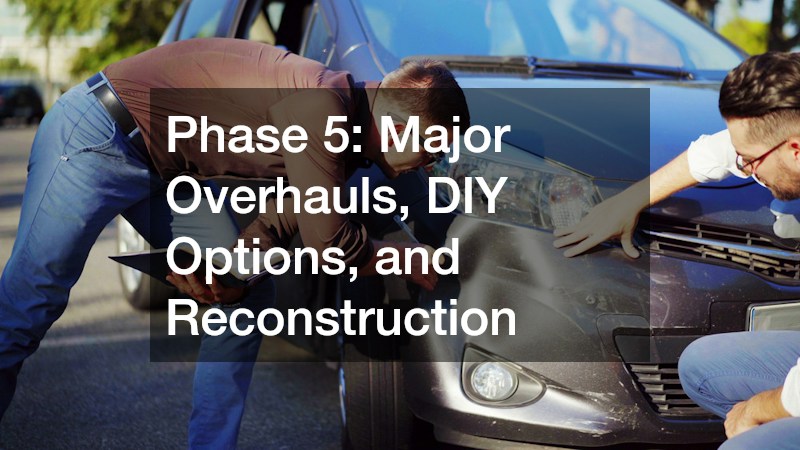
When an emergency results in major mechanical failure, owners face a difficult financial decision: scrap the vehicle, accept a total loss settlement from insurance, or proceed with major reconstruction.
- The 70-80% Rule: Insurance adjusters generally classify a vehicle as a total loss if the cost of parts and labor exceeds 70% to 80% of the vehicle’s Pre-Loss Actual Cash Value (ACV).
- Evaluating Salvage Titles: Rebuilding a severely damaged car often results in a salvage or rebuilt title, which significantly lowers resale value and makes obtaining comprehensive insurance coverage difficult.
- Component Sourcing Costs: Weigh the cost of new OEM parts against certified remanufactured assemblies or low-mileage donor parts before committing to a major rebuild project.
If the chassis remains structurally sound but the powertrain is ruined by oil starvation, hydro-locking, or broken internal components, booking an auto engine replacement can be a practical way to preserve your investment. Swapping in a remanufactured block or certified crate engine can restore the vehicle to reliable running condition for a fraction of the cost of buying a new vehicle in today’s market.
Weighing Professional Repairs Against Self-Service Work
Enthusiasts and skilled mechanics often choose to tackle major post-emergency repairs themselves to save on steep shop labor costs. However, major underbody repairs, transmission drops, and engine pulls require specialized tools and a safe working space that standard home garages lack.
Renting space at a self-service garage with a car lift rental gives you professional tools, fluid collection systems, and overhead clearance. Working under a vehicle raised securely on a two-post or four-post hydraulic lift is much safer than relying on floor jacks and jack stands on an uneven garage floor. This controlled environment lets you safely remove heavy driveline components, align engine mounts, and inspect structural subframes.
Phase 6: Protecting Your Legal Rights and Managing Citations
Navigating Civil Liability and Insurance Claims
In the days following a severe roadside emergency, you will likely interact with insurance adjusters, claims investigators, and opposing parties. Managing these communications carefully is critical to securing fair compensation for property damage and medical expenses.
- Never Give Unrecorded Statements Early: Insurance adjusters often request recorded statements within hours of an incident. Politeness aside, you have the right to review official police reports and consult counsel before providing formal statements.
- Track All Incident-Related Expenses: Keep a dedicated folder for all towing invoices, daily yard storage fees, rental car receipts, medical bills, and lost wage documentation.
- Understand Comparative Fault Laws: Depending on your jurisdiction, your final settlement can be reduced proportionally if you are found partially at fault for failing to maintain your vehicle or failing to clear the roadway promptly.
When traffic accidents result in allegations of impairment or chemical testing at the scene, securing experienced DUI defense attorneys is a critical step in preserving your constitutional rights. Specialized legal counsel can scrutinize breathalyzer calibration logs, challenge field sobriety test administration errors caused by accident-induced shock, and protect your driving privileges during administrative license suspension hearings.
Handling Complex Traffic Charges and State Inquiries
Emergency roadside events can trigger strict law enforcement scrutiny. Responding officers may issue traffic citations for failure to control speed, unsafe lane changes, driving with expired safety inspections, or reckless driving based on scene observations.
Working with skilled criminal attorneys helps prevent minor traffic infractions or emergency-related moving violations from turning into serious charges on your permanent record. A legal defense team can review bodycam footage, challenge flawed accident reconstruction models, and ensure that mechanical failures—such as sudden tire blowouts or unexpected brake line ruptures—are properly presented as mitigating factors rather than criminal negligence.
Using This Guide for Vehicle Emergencies
A severe roadside vehicle emergency tests any driver’s patience, stress tolerance, and decision-making skills. The actions you take in the immediate aftermath shape your physical safety, financial health, and legal standing for months or years to come. By prioritizing scene security, documenting evidence, choosing vetted repair facilities, and securing proper legal representation, you can navigate a stressful crisis with confidence.